15 The Count of Monte Cristo Fun Facts You Probably Didn’t Know

Think you know The Count of Monte Cristo? Think again 👀
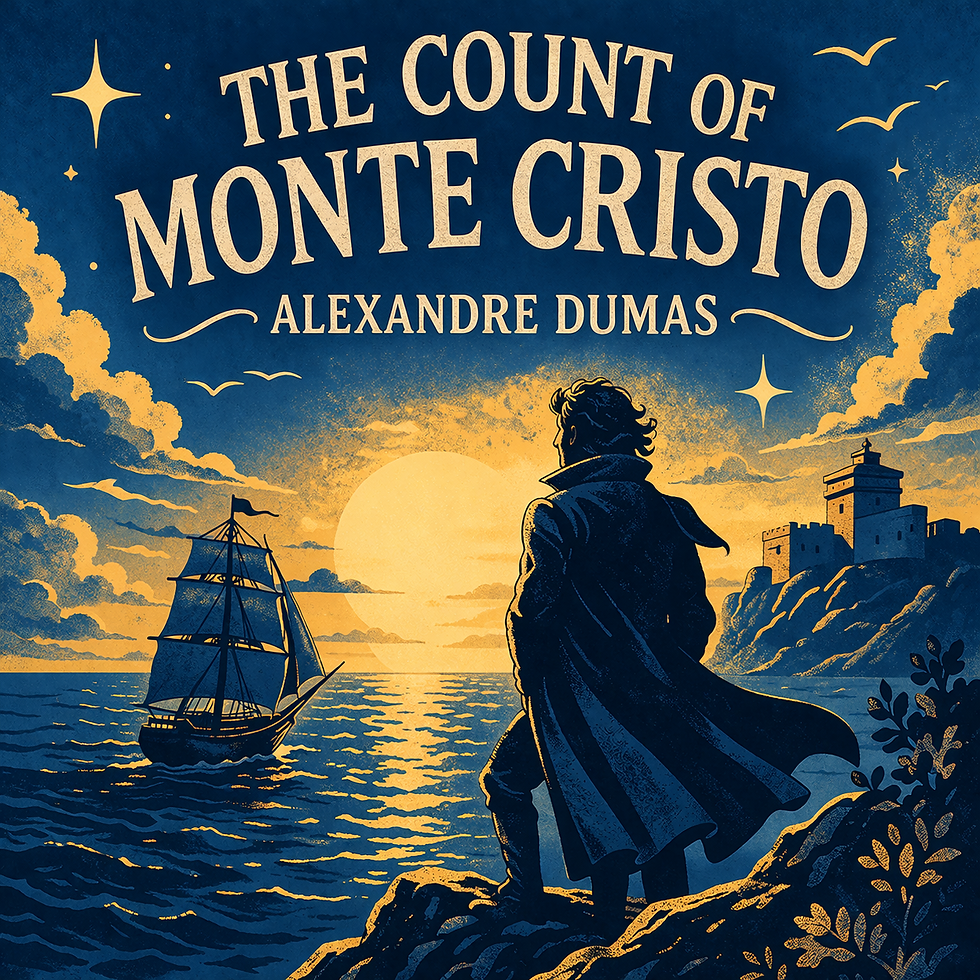
Most people know it as a classic revenge story — but behind the sailing ships, secret prisons, and hidden treasure is a wild real-life history, a larger-than-life author, and some seriously unexpected facts.
Prefer audio? 👉 Listen to the full Count of Monte Cristo episode now—only on the Book Trivia Podcast.
Below, we’ve pulled together the best The Count of Monte Cristo fun facts — from real-life inspiration to the wild story behind the book — the kind you definitely didn’t learn in school.
The Count of Monte Cristo Fun Facts
⚔️ 1. It was inspired by a real revenge story
One of the most famous facts about The Count of Monte Cristo is that it wasn’t entirely invented. Dumas drew inspiration from a real case about a man named Pierre Picaud — a shoemaker who was falsely accused of being a spy, imprisoned, and later sought revenge after acquiring wealth.
👉 The parallels to Edmond Dantès are hard to miss.
⛓️ 2. It was originally published in instalments
Instead of releasing it as one long novel, Dumas published The Count of Monte Cristo in serialised instalments in newspapers.
👉 This structure helps explain:
The frequent cliffhangers
The fast pacing
The addictive, “just one more chapter” feel
It’s similar to how modern series keep audiences hooked episode by episode.
🧠 3. Dumas worked with a collaborator
The Count of Monte Cristo was developed with the help of writer Auguste Maquet.
He:
Contributed historical research
Helped draft early versions of the story
Dumas then expanded and refined the material into the final version.
👉 Their partnership later ended in a legal dispute over credit and payment.
🏴☠️ 4. It’s a very long novel
Depending on the edition, The Count of Monte Cristo is typically:
👉 800–1,200+ pages
Which makes it one of the longer classic novels — but also one many readers still find surprisingly engaging.
💰 5. “Monte Cristo” became a global cultural reference
The name “Monte Cristo” has appeared far beyond the book itself. You’ll find it in:
A Cuban cigar brand
A well-known sandwich
Restaurants, bars, and casinos
👉 A sign of just how widely the story has travelled.
🎭 6. Dumas lived an extraordinary life
Alexandre Dumas was known for living as dramatically as the stories he wrote.
Biographers have identified dozens of relationships over his lifetime, alongside:
A love of luxury and entertaining
Periods of financial difficulty
A hugely productive writing career
🏰 7. He built a house inspired by his success
After the success of his novels, Dumas built an estate called the Château de Monte-Cristo. It included:
A grand residence
A separate writing retreat
Space for hosting guests and performances
👉 A physical reflection of his literary fame.
🧪 8. He took part in experimental literary circles
Dumas was associated with the Club des Hashishins in Paris — a group of writers and artists who explored altered states of consciousness.
👉 The group included several well-known literary figures of the time.
🎓 9. A key character was inspired by a real person
The character Abbé Faria is widely believed to have been inspired by José Custódio de Faria, a real-life priest known for his work in hypnotism.
👉 In the novel, he becomes Dantès’ mentor and teacher during imprisonment.
⚖️ 10. His father influenced the story
Dumas’ father, Thomas-Alexandre Dumas, was:
A general in the French army
Imprisoned after political conflict
Known for his bravery and eventual downfall
👉 Many scholars see clear parallels between his life and Dantès’ journey.
🎬 11. It’s one of the most adapted novels ever
The Count of Monte Cristo has been adapted into:
Numerous films
Television series and miniseries
Stage productions
Animated versions
👉 It continues to be reinterpreted for new audiences.
📖 12. It has remained widely published since the 19th century
Since its original release, The Count of Monte Cristo has remained widely available and continuously read around the world.
🧠 13. Its themes still resonate today
At its core, the novel explores:
Revenge vs justice
Identity and reinvention
Power, betrayal, and control
👉 Themes that still feel relevant in modern storytelling.
👀 14. Readers still debate the ending
Many readers continue to question:
Whether Dantès went too far
Who the “real villain” is
Whether the ending is satisfying
👉 It’s far more complex than a simple revenge story.
📚 15. It’s more accessible than you’d expect
Despite its age and length, The Count of Monte Cristo is often described as:
Fast-paced
Easy to follow (at least early on!)
Highly readable for a classic
👉 Which is why it continues to attract new readers.
🎙️ Want the full breakdown (and the wildest stories)?
We go much deeper in the episode — from real-life inspiration to Dumas’ chaotic personal life.
🎧 Want the trivia, banter, and hyperspace dives in audio form? Listen now on the Book Trivia Podcast.
FAQS
What is The Count of Monte Cristo about?
The Count of Monte Cristo follows Edmond Dantès, a young sailor who is falsely imprisoned and later escapes, acquires wealth, and carefully plans revenge against those who betrayed him.
Was The Count of Monte Cristo based on a true story?
The novel was inspired by a real case involving a man named Pierre Picaud, who was wrongly imprisoned and later sought revenge. Alexandre Dumas adapted elements of this story into a much more complex fictional narrative.
Who was Alexandre Dumas?
Alexandre Dumas was a 19th-century French writer best known for historical adventure novels, including The Count of Monte Cristo and The Three Musketeers. He was one of the most widely read authors of his time.
How long is The Count of Monte Cristo?
The length varies by edition, but most versions range between 800 and 1,200+ pages, making it one of the longer classic novels.
When was The Count of Monte Cristo written?
The novel was originally published in serial form between 1844 and 1846 in a French newspaper before being released as a complete book.
Why is The Count of Monte Cristo so popular?
The novel combines a compelling revenge plot with themes of justice, identity, and transformation. Its fast-paced storytelling and dramatic twists have helped it remain widely read for over a century.
Is The Count of Monte Cristo hard to read?
While it is a long book, many readers find it surprisingly accessible due to its clear storytelling and engaging plot, especially in modern translations.


Comments